

Are Carbon Fiber Motorcycle Helmets Worth the Extra Cost?
Posted by Atif on Oct 26th 2026
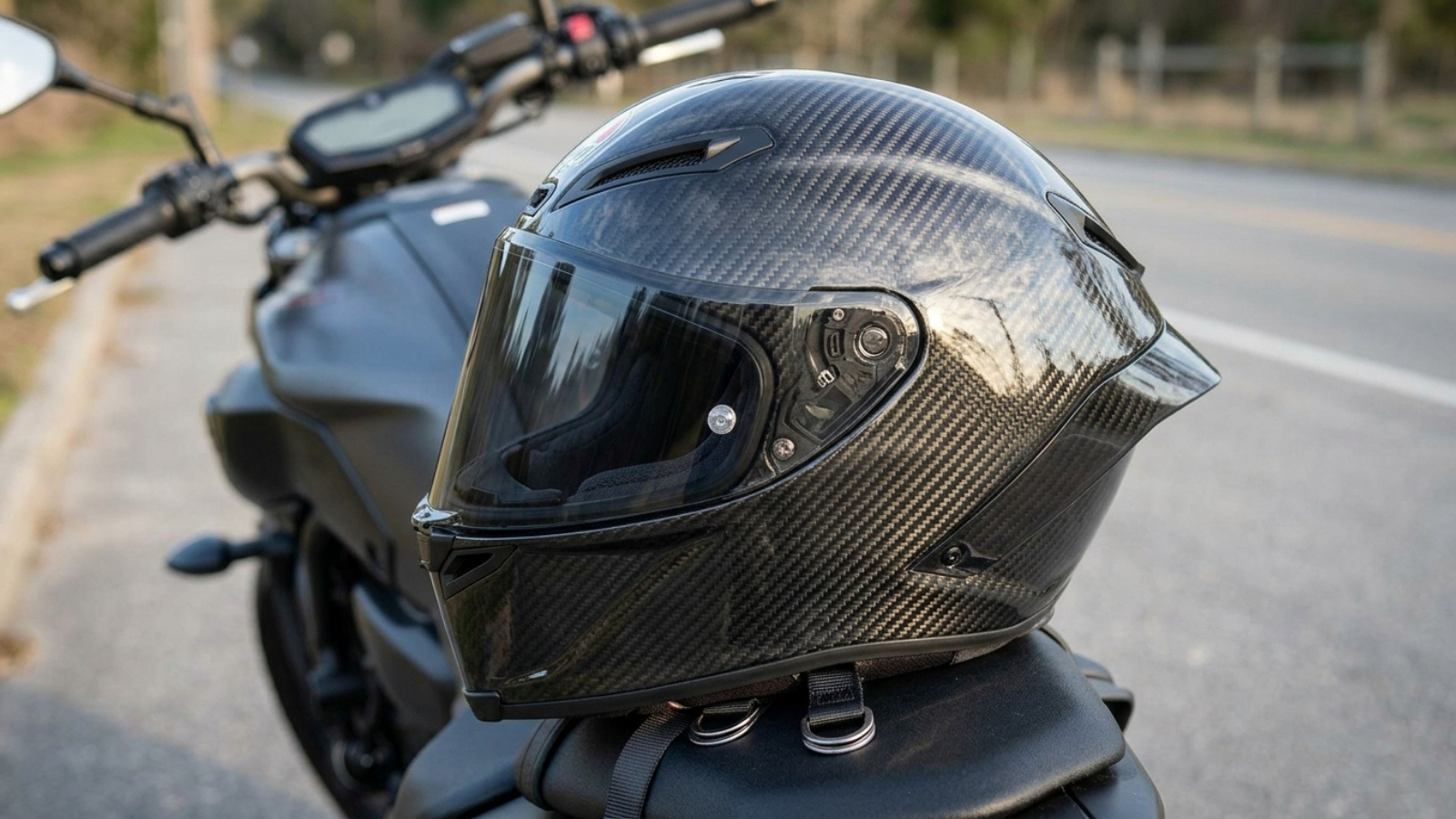
HJC lists its RPHA 12N at 1,521 grams. The RPHA 12N Carbon? Exactly the same, for about $100 more.
Carbon can save weight. Sometimes it just lightens your wallet. Here's how to tell the difference:
- What "carbon fiber helmet" really means
- Real weight numbers from matching models
- Whether carbon makes a helmet safer
- Who should (and shouldn't) pay for carbon
- Top carbon fiber helmets worth the money
You'll find every helmet here at Xtreme Helmets. Orders over $59 ship free, and our Price Match Guarantee covers the rest.
What "Carbon Fiber Helmet" Really Means
"Carbon fiber" on a label can mean very different things. Before you pay the premium, know which kind you're buying.
- Full carbon: The shell is all carbon fiber. The AGV Pista GP RR and LS2 Advant X Carbon are listed as 100% carbon.
- Carbon hybrid: Carbon is woven with other fibers, like aramid or fiberglass. HJC's standard RPHA shells already use a carbon-aramid hybrid. That's why the "Carbon" versions don't always weigh less.
- Weave and finish: Labels like 3K, 6K, or forged carbon describe the weave pattern. They change how the shell looks far more than how it rides.
Bottom line: Read the shell spec, not just the product name.
Carbon vs. Fiberglass vs. Polycarbonate
Most helmets use one of three shell materials. Here's how they compare:
|
Shell |
Typical Price |
Strengths |
Trade-Offs |
|
Polycarbonate |
~$100 to $300 |
Affordable, flexes to absorb impact |
Thicker walls, sensitive to solvents |
|
Fiberglass composite |
~$300 to $1,000 |
Strong, thinner walls, more shell sizes |
Costs more |
|
Carbon fiber |
~$450 to $1,800 |
Very stiff and strong for its weight |
Highest cost, weight savings vary |
Want a deeper look at each material? Read what motorcycle helmets are made of.
Weight: Real Numbers, Not Marketing
The best test is to compare the same model in standard and carbon versions. Here's what the listings show:
|
Model |
Standard |
Carbon |
Difference |
|
LS2 Advant X |
~1,600 g / ~$500 |
~1,470 g / ~$600 |
130 g lighter, +$100 |
|
HJC RPHA 12N |
1,521 g / ~$500 |
1,521 g / ~$600 |
None listed, +$100 |
|
HJC F100 |
1,628 g / ~$450 |
1,628 g / ~$490 |
None listed, +$40 |
|
HJC RPHA 91 |
3.84 lb / ~$590 |
3.84 lb / ~$690 |
None listed, +$100 |
Weights are as listed. Listings sometimes reuse spec data between versions, so confirm with the manufacturer if weight is your top priority.
Now compare across brands:
- The LS2 Dragon Carbon is listed at about 1,280 g, the lightest full face we carry.
- The non-carbon HJC RPHA 72 is about 1,445 g in size large.
- The Daytona C6 Carbon modular is about 1,650 g in medium, roughly 200 g heavier than that non-carbon HJC.
The takeaway: Carbon can be the lightest option. Design, helmet type, and size matter just as much. A carbon modular will rarely beat a well-built fiberglass full face on the scale.
Is Carbon Fiber Safer?
Not automatically. A stiff carbon shell spreads an impact, but the EPS foam liner underneath does most of the work of absorbing it. NHTSA points to that firm, roughly inch-thick foam liner as a key sign of a real safety helmet.
The UK's SHARP testing program finds no link between a helmet's price and its safety rating. Carbon helmets must pass the same tests as everything else.
What to check instead:
- Certification: The LS2 Dragon Carbon is DOT and ECE 22.06 certified. The RPHA 91 Carbon is listed as DOT only.
- Rotational testing: ECE 22.06 and FIM add rotational impact tests. Snell adds tough high-energy tests.
- Fit: A perfectly fitted polycarbonate helmet protects better than a loose carbon one.
Need a refresher on the labels? See helmet safety ratings explained.
Fit and Certification Don't Change
When a helmet comes in standard and carbon versions, you usually get the same shell shape, interior, and sizing. The HJC RPHA 12N and RPHA 12N Carbon, for example, both carry DOT and ECE 22.06 certification.
That's good news for shoppers. If the standard version fits you, the carbon version almost certainly will too. Not sure about your fit? Our guide to finding the right fitting helmet walks you through it.
Who Should Pay for Carbon?
Carbon is a smart upgrade for some riders and a pricey extra for others. Here's how to tell which one you are.
Carbon is worth it if you:
- Ride long days. Saving 100 to 300 grams makes a real difference to neck fatigue by hour six.
- Ride the track. A lighter helmet is easier to hold steady against wind blast in a tuck.
- Ride ADV or off-road. You turn your head constantly, and every gram adds up.
- Love the look. A clear-coated carbon weave is gorgeous, and that's a fair reason too.
Skip carbon if you:
- Mostly commute. On short rides, the weight difference is hard to feel.
- Are a new rider. Drops happen, and any dropped helmet should be replaced.
- Would stretch your budget. Put the money into better gloves or a jacket from our protective gear instead.
Carbon Helmets Worth the Money
These carbon helmets back up their price with real numbers or features. Each one earns its premium.
|
Helmet |
Type |
Approx. Price |
Why It Earns the Price |
|
Full face |
~$600 |
Lightest full face we carry, at ~1,280 g |
|
|
Sport full face |
~$605 |
~3.05 lb, with inflatable AirFit cheek pads |
|
|
180° modular |
~$600 |
Proven 130 g saving over the standard version |
|
|
Modular |
~$630 |
~3.4 lb, with a photochromic shield |
|
|
Race |
~$1,680 |
Full carbon, four shells, FIM homologation |
Browse every option in our carbon fiber helmets collection. Weighing race helmets? See our AGV Pista GP RR vs. Shoei X-Fifteen vs. Arai Corsair-X comparison.
Go Lighter the Smart Way With Xtreme Helmets
Carbon fiber is worth it when the spec sheet proves it. Compare the actual weight, check the certification, and make sure the fit is right. If a carbon version weighs the same as the standard one, keep the $100.
Key takeaways:
- "Carbon" labels vary: Full carbon and carbon hybrids aren't the same thing.
- Lighter isn't guaranteed: Several carbon versions list the same weight as the standard model.
- Carbon isn't safer by default: Certification and fit matter more.
- Carbon pays off most for touring, track, and ADV riders.
At Xtreme Helmets, you can compare carbon and standard versions side by side. Our free exchange policy covers your first size swap, so the only thing you risk is falling for that weave.
FAQs
Here are quick answers to the questions riders ask most about carbon helmets.
Are carbon fiber motorcycle helmets worth it?
They're worth it when the carbon version is measurably lighter, and you ride long distances, track days, or ADV. If the listed weight matches the standard version, the extra cost mostly buys looks.
Are carbon fiber helmets safer than regular helmets?
Not by default. Every certified helmet passes the same tests. The SHARP program finds no link between price and protection. Look for ECE 22.06 or Snell on top of DOT.
How much lighter is a carbon fiber helmet?
Anywhere from 0 to about 130 grams when you compare the same model in both versions. The LS2 Advant X Carbon saves about 130 g. Several HJC carbon versions list no difference.
Is carbon fiber better than fiberglass for helmets?
Carbon is stiffer and stronger for its weight. Fiberglass composites, like the shell on the HJC RPHA 72, can come very close for less money. Compare actual weights rather than materials.
Do carbon fiber helmets need replacing sooner?
No. Follow the same rules as any helmet: replace it after any crash or hard drop, and about every 5 years of regular use. The NHTSA guidance on spotting unsafe helmets applies to carbon too.